

Setting out to establish your own business can be daunting. Many people considering starting their own business will likely begin with a search query along the lines of “how to set-up my own business?”, resulting in an abundance of information, much of it confusing and even conflicting. It’s no surprise then that so many talented people with great ideas quit before they even get started.
Aside from the vast amount of information there’s the added element of predators lurking, hoping to make you shell out money to pay for services you don’t need, which only exacerbates the feeling of anxiety.
In this article I aim to provide some clear and simple guidance that will walk you through the essential early steps and key actions involved in establishing your own small business successfully. This information is based on my learnings and the actual steps I took when setting up Green Peaks Marketing Services LLC in Connecticut. The general guidance is applicable to all states, but be sure to check for nuances and use your specific state governmental properties for filing etc.
I hope this article not only provides some clarity but also saves you some money that can be put to better use as you launch your new business. And if you’re a skim reader, just scroll down to the Key Action Boxes to get links and resources that you need.
Step 1: Check if Your Company Name is Available to Use
Maybe it came in a dream or perhaps during a chat with friends at the bar – all of a sudden you think you’ve found the perfect name for your new business idea.
Before you go too far and start printing those business cards or designing a logo, or creating an online marketing plan, it’s crucial to ensure that your chosen company name is available and not trademarked. It’s a very quick and easy step to take -so simple in fact that you can go ahead do it from your phone in the bar, although maybe not while you sleep!
KEY ACTION: PERFORM A TRADEMARK CHECK ON YOUR DESIRED COMPANY NAME
Utilize a resource like the US Patent and Trademark Office (USPTO) to check both local and national trademarks. There used to be a system called TESS which was retired in November 2023 so if you’ve read about this service elsewhere, save yourself the trouble and stop looking for it.
Names are trademarked at the national level so if somebody has trademarked a company name that you had in mind, even if the company is registered in a state(s) other than the one you plan to do business in, you still CAN ‘T use that name.
On the other hand, if the name is NOT trademarked, and the company using your desired name is not registered in the state(s) where you want to conduct business, then it can be all yours!
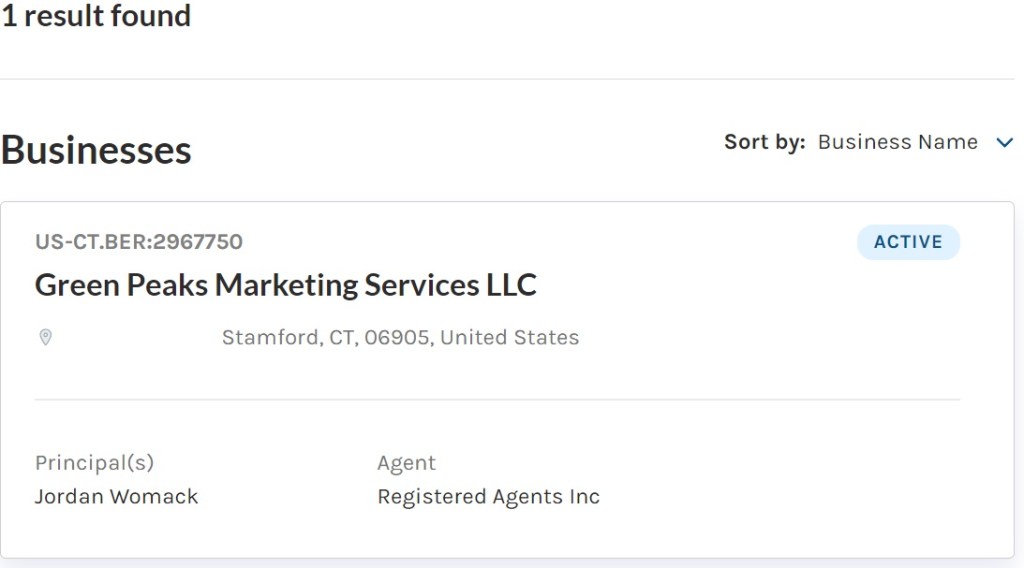
If you plan on doing business only in your home state then another place you could perform this check is your local state’s company registry database. If you happen to be in the state of Connecticut, like Green Peaks Marketing Services, then you can use the CT Business Records Search tool where you’ll be shown the results of any company already using your desired company name and doing business (registered) in CT.
Step 2: Apply to Become and LLC
Your jazzy company name is free! Now time to claim it. Most often people will want to establish the business as an LLC for the primary reason that it allows you to separate and protect your personal assets from your business activities in case of any possible future litigation.
LLC stands for Limited Liability Company, which means it has its own legal identity and it ‘Limits’ your personal liability. Your business can have multiple owners as an LLC, whereas a sole proprietorship can only have one owner and personal assets are not protected.
If you want simplicity it makes sense to file your LLC in the state where you live, which is also usually the cheapest option. You might notice cheaper filing fees in other states but you’ll still have the additional task of registering in your home state as a foreign entity if you plan on doing any business there.
Most of the time a small businesses such as Landscapers, Construction Companies, a Restaurants or Auto Body shops will be doing business in the owners home state.
In a nutshell, you’ll need to register in any state where you plan on doing a substantial amount of business.
If you are planning to do business in multiple states it might make sense for you to use a service such as ZenBusiness or LegalShield to help you manage everything. Alternatively, you could use them for part of the process. Just know that they will try to upsell you other services that they or their partners provide which are not always needed.
Note: I am NOT affiliated with, nor do I get get a kick-back from any companies mentioned in this article, just in case you do decided to use them after reading.
KEY ACTION: REGISTER YOUR LLC IN STATES(S) WHERE YOU’LL CONDUCT BUSINESS.
If you plan on only doing business in a single state then you can absolutely handle all (or most) of the registration yourself.
If you are planning a small business in the state of CT and decide to register your LLC yourself you can do this online at CT.gov. Before starting this process you’ll need a few pieces of information including:
- An NAICS Code (North American Industry Classification System)
- Your Registered Business Agent
- Business Mailing Address
- Business Email Address
NAICS Code
The NAICS code step is easy and is used merely by the state to categorize the types of businesses that exist.
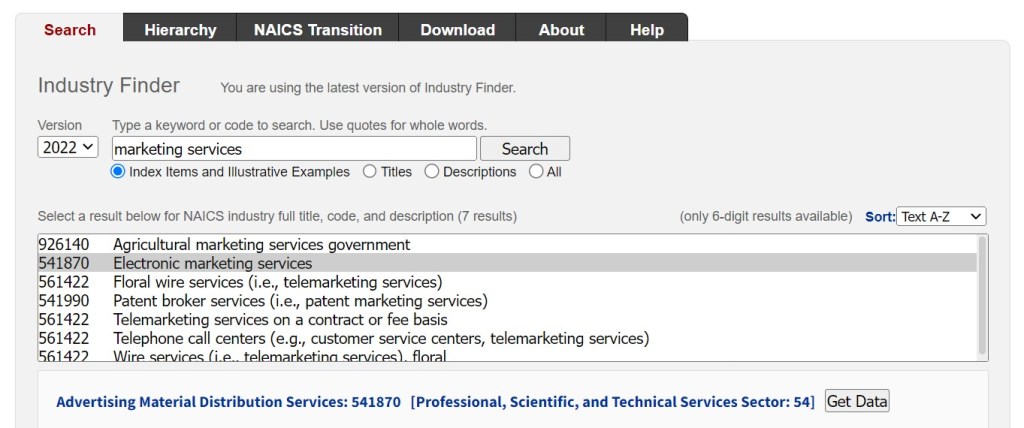
For example, if your company will provide marketing services simply enter “marketing services” and you’ll be present with several related codes to choose the one that fits best. There’s also a ton of helpful employment and wages data, economic data and other tools such as a Consumer Prices Index Inflation tool that can be found on the website.
SIMPLE KEY ACTION: LOOK-UP THE RELEVANT NAICS CODE.
Simply use this tool from the US Bureau of Labor Statistics and enter your business type.
Setting up a Registered Business Agent
Most states in the US will require this when registering an LLC so you can’t skip this part. A registered agent serves as the official and approved point of contact for legal and official documentation handling who must be present at a physical address in the state (not a PO Box) between regular business hours (Mon-Fri between 9am – 5pm).
A business owner can make themselves a registered agent but it might not be a good idea.
Utilizing services like ZenBusiness or Northwest Registered Agent can help fulfill this requirement and maintain your privacy since the registered agent address is publicly available (which also means easily accessible for junk mail list scraping).
The agent will be responsible for receiving and informing you of any important government, tax or legal documents that require your urgent attention, keeping things more orderly and making sure you are promptly informed. An example being if a lawsuit is filed against the company or if there is a new federal requirement that impacts small business. It’s even more helpful to use such a service if you planning to do business in multiple states.
Business Address and Email Address
The address used for LLC registration must be a physical address, not a PO Box for example. It doesn’t have to be your home, office or place of work, although if you do have an office it probably makes sense to use that. You can’t use the Registered Agent address as your business address as that is only for legal, tax or other government related correspondence.
If you do use your home as your official business address just be aware that it will be in the public domain.
Another option you have is to use a virtual address which is a paid for service which can be used to receive business mail and forward it on to you. To do this you’ll need to complete a form with the USPS which gives the virtual address agent permission to handle your mail.
There are companies out there who will try to charge you a premium to handle this form for you, but you don’t need to pay. Just download it from here.
The typical cost for such a service ranges from $10-$40 per month, depending on your needs ranging from a simple notification that mail has been received, to actual mail forwarding or even fax and telephone services.
When it comes to email address, you can use whatever you like but it really isn’t difficult to create a separate business email address using a free Gmail domain along with your company name as the prefix, for example JazzyNameMarketingServices@Gmail.com
Step 3: Request an Employer Identification Number (EIN) for Your New Business
An EIN (Employer Identification Number) can be requested from the Federal Government and LLC’s require one for a few purposes, including opening a business bank account and fulfilling tax obligations. Skipping either is not advised! Sole corporations don’t need an EIN but use their SSN instead.
KEY ACTION: REQUEST AN EIN.
The only place you need to go to request and EIN for FREE is the IRS.Gov website and apply here. Please don’t fall for services trying to charge you $100-$200 for doing this. I almost did! Don’t be fooled by a provider that has “IRS” in their website address -make sure you are using the official IRS website.
Step 4: Write an Operating Agreement
An Operating Agreement will outline how your company will operate and is an absolute requirement if your LLC will have more than one owner or shareholder – essentially it’s a legal document that outlines what the business intent is and what everyone’s responsibilities and obligations are, as well as what happens if one or more of them exit.

Even if you are a one-person band it is still advisable to have an Operating Agreement in place as it further reinforces the company’s LLC status, and that your personal possessions and separate from the business. including shareholder rights, responsibilities, and profit distribution. Some banks might also require it to open up a business bank account.
KEY ACTION: WRITE A BUSINESS OPERATING AGREEMENT
For a small business, this is another step you can do yourself especially if you are to be a single owner business. It’s another task that some companies will try to charge you for, which isn’t necessary at all.
I used Forbes’ LLC operating agreement template which provides guidance. You can download here.
For multiple member LLC’s it might make sense to solicit the help of a legal professional as a more complex Operating Agreement and other considerations may be required.
Step 5: File a Beneficial Ownership Information (BOI) Report
Compliance with federal regulations is crucial if you want to avoid nasty fines. Filing a BOI report in accordance with the Corporate Transparency Act is a new federal requirement that went into effect on January 1st 2024.
LLC’s must file this report to provide details of any individuals who directly own or have substantial control (e.g. officers and key decision makers) in a company. The purpose is to prevent nefarious business activity by making it harder for individuals to remain discreet if they are involved in money laundering, tax evasion etc.
You need to complete this within 90 days of registering your business otherwise you could face an early fine.
KEY ACTION: SUBMIT YOU BOI REPORT WITHIN 90 DAYS OF BUSINESS FORMATION
Again, this is just one small (and short) step that you can do by yourself, in less than 10 minutes, for free. If a service provider tries to convince you that it is complex and you should pay them for their help, it’s a lie.
The easiest way to do this is online via the FinCEN website or through PDF upload or webform. Both options can be found here.
Step 6: Set up a Business Bank Account and Move Money to Cover Tax and Other Expenses
This is a regret I hear time and again from other business owners – you must keep your personal and business finances separate or you’ll have an almighty headache to deal with later on. Doing so will simplify accounting, tax filing and financial management.
KEY ACTION: SET UP BUSINESS CHECKING AND SAVINGS BANK ACCOUNTS
You’ll have to do your own research but here is a little guidance. Some US Banks offer a fee free bank account as long as you maintain a balance over a certain amount, others might charge a fee of between $5-$20 per month.
Always put away a suitable amount to cover your tax obligations.
Please do consult a CPA and Tax Advisor if you feel uncertain about this area and do some research on good financial management for small businesses. The last thing you want is to receive an unexpected tax bill or find that you can’t pay some of your critical business expenses because of an oversight.
Here is some general guidance you could consider.
Set up 3 accounts:
- Personal Checking Account
- Business Checking Account
- Business Savings Account
All incoming money from business sources should always go into the Business Checking Account first. After calculating your expenses, move 20-25% to a Business Savings account which is for Taxes. Pay yourself a wage from what is left in the Business Checking account.
Step 7: Create a Cost Effective Marketing Strategy

It’s always important to keep a tight control on business finances, but especially so in the first few years of doing business. It can be very temping to think that your business idea is so great that all you need to lure customers to your door is a few months of Paid Search Ads, a Facebook page announcement or two, and a few yard signs around town with your phone number and address. That should be enough to get the word out right?
Before you know it, you’ve lost faith in marketing and start to wonder if you made the right decision in setting-up your business. It’s important to have a long term marketing strategy, investing any available marketing funds wisely in the right channels, aligned carefully to the behaviors of your potential new customers.
A Strategic Marketing Approach Sets You on the Correct Path
It’s important to think strategically about customer behavior and your competition. I’ve had many conversations with business owners about this who have a “Doh!” moment when we go into depth and they realize where they have been going wrong.
Take a Landscaper for example. Who is their competition? Other local Landscaping companies of course, right? But when you think about it, their competition also includes Home Depot, Lowes and the like.
Should your marketing efforts focus on how superior your service is vs ‘Chopper Dave’s Landscaping’, or should you try to intercept people planning on spending big money on a new lawnmower, weed wackers, and seed spreaders. Maybe insert yourself into the buyer journey when they find themselves confused about fertilizer schedule which they are researching.
A marketing strategy can then be developed that includes content and messaging focused around the benefits of using a landscaper vs doing it yourself, including.
- Cost of buying your own equipment which can soon add up
- Storage space needed
- Dealing with equipment maintenance issues and costs
- Confusion over the many types of seeds, fertilizers, herbicides etc. and the right time to apply
Create a Clear, Easy to Use Website That’s Optimized For Search Engines
If you are a service provider without a physical location then of course investing in a high quality, well structured, and easy to navigate website is essential. Confusing, cluttered, difficult to read websites don’t provide a good user experience which creates a bad impression of your company.
Making sure your website has a chance of being found when your potential customers identify a need and start searching for a solution is the next step.
44% or people start a purchasing journey with a search engine query. Learning or investing in SEO help is a must as this creates free (organic) traffic – the number one source of traffic to websites. SEO is an ongoing journey – an investment of time and effort to keep your website performing well technically and providing helpful information to people based on their search intent. The worst thing you can do to your website is let old content go stale and become irrelevant – search engines will penalize you for it.
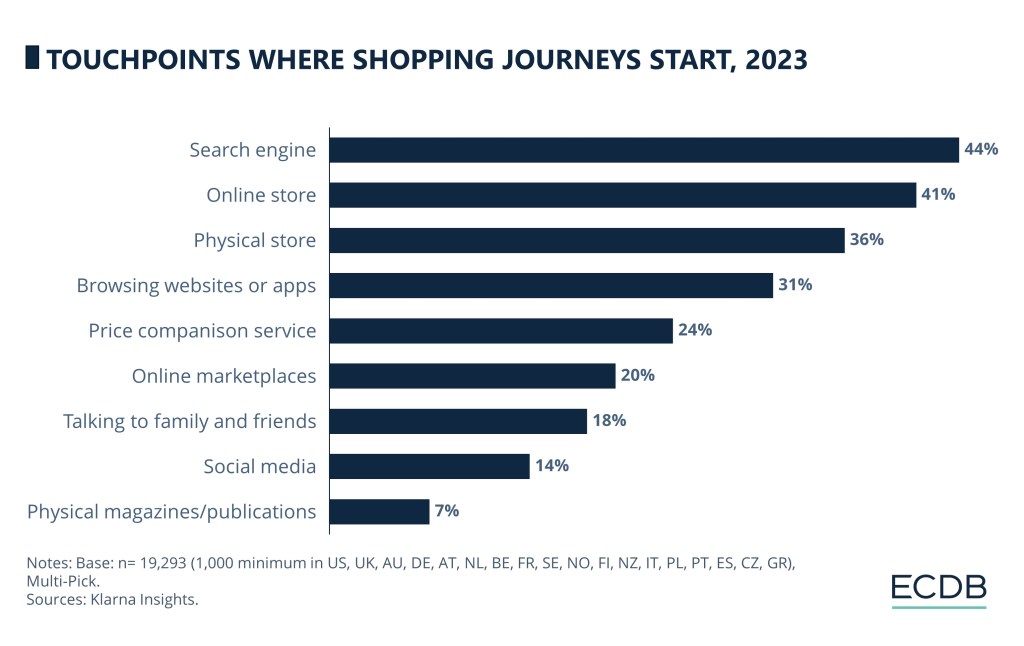
Even if people do see that bright lawn sign at the stop light in town and are interested in finding out more, they probably aren’t going to remember your website address or phone number. Instead, they’ll Google something pretty generic later that day/week. Hopefully it will be your business and not one of your competitors who show up higher in the search results.
Compliment Search with Other Cost Effective Marketing Strategies
Other marketing strategies you can employ include; Promotions to drive action and lessen buyer risk, Social Media Marketing, Local Print, Radio, and Local Business Partnerships to name just a few. The truth is, they all feed into and compliment the habitual inclination of people to use search engines as part of modern day buyer-behavior.
If a potential customer hears a radio ad, or sees a print ad they’ll still most likely want to first check out your website and read reviews as one of their next steps, and how will they find that information? Yep, a Search Engine.
Conclusion: Go Get It!
Successfully starting a small business is always going to be a little nerve-racking with concerns about making the wrong decisions as your go. Hopefully, with this guide you’ll be well-equipped to navigate the intricacies of establishing your own business venture. Good Luck!
Are you a small business looking for marketing help?
Based in CT, we specialize in helping small to medium sized businesses grow through digital and traditional marketing strategies. Reach out for a friendly, no obligation chat to see how we might be able to help.
 Green Peaks Marketing Services LLC
Leave a comment